
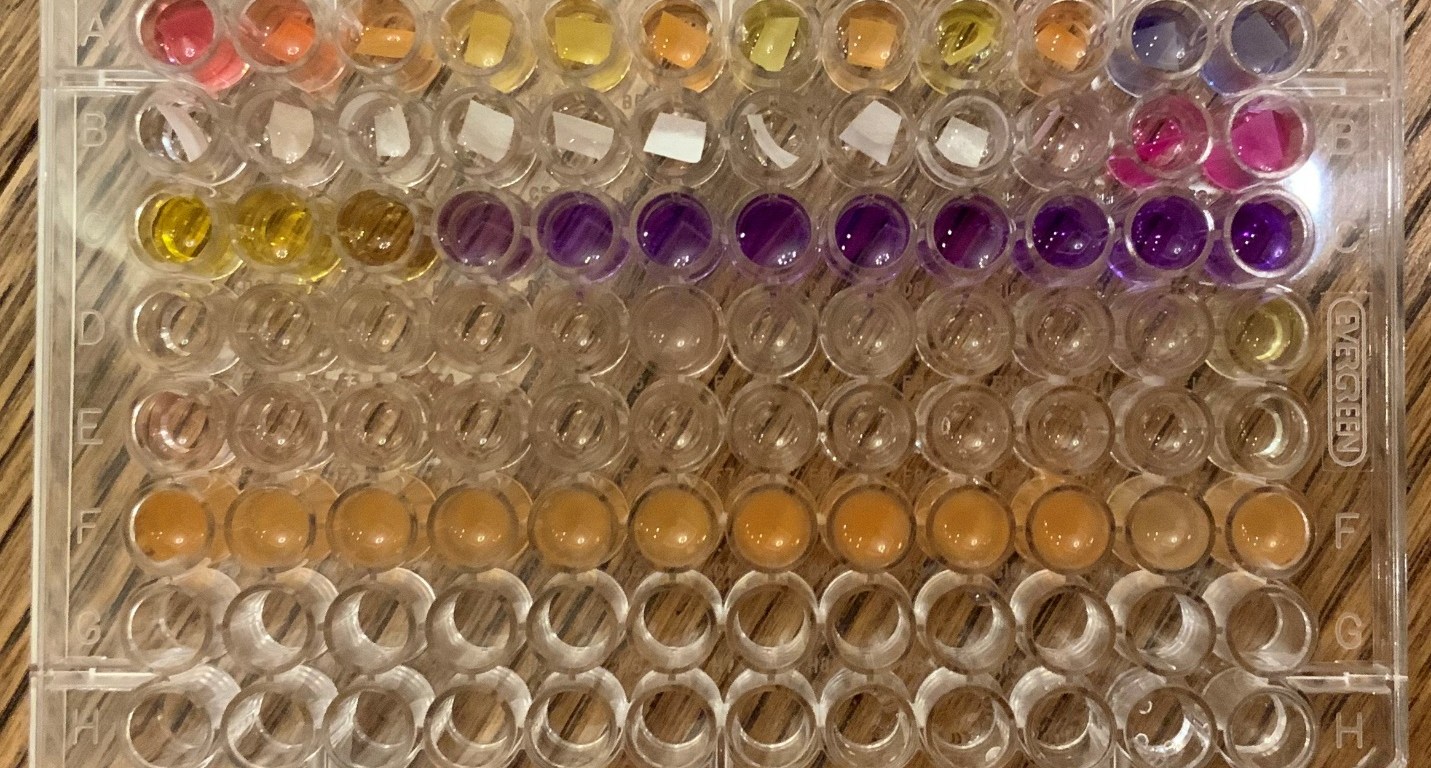
Featured image: Comparison of apple peel extract, plant leaf extract, and ketchup (rows D, E, F) with more conventional pH indicators: universal indicator solution, phenolphthalein, and bromophenol blue.
Back in 2020, I investigated the chemistry of pH indicators, substances that change colour based on acidity. I decided to find out whether biological pigments from plants can do the same thing.
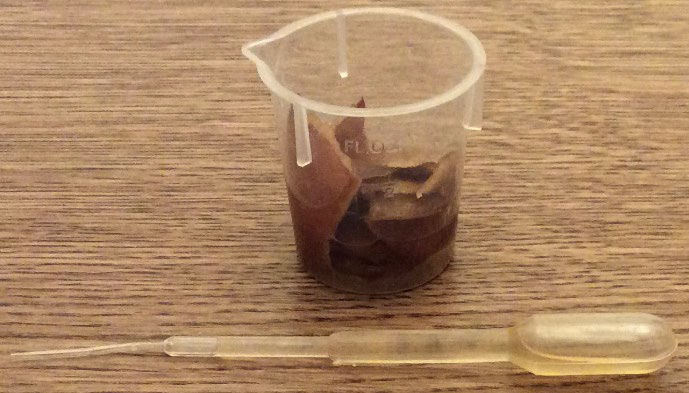
After the tedious process of preparing a solutions of pH 1 to 12 through tenfold dilutions, I added my indicators to the solutions. Besides conventional, commercial indicators, I prepared three biological dyes by squashing apple peels and coloured plant leaves in a solution of isopropyl alcohol and water.
I found that two of the plant pigments did, indeed, impart a colour only at certain acidities. I have since found that indicators’ color is related to their molecular bonding. Indicators have functional groups that undergo changes in acidic or basic conditions, which affect the molecule’s structure and thus causes a different colour.
 Spotlight: STEM Publication